Thursday 14 May 2026
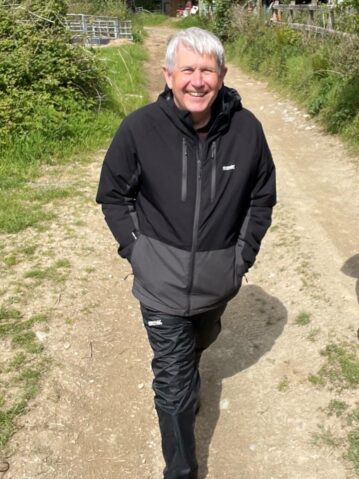
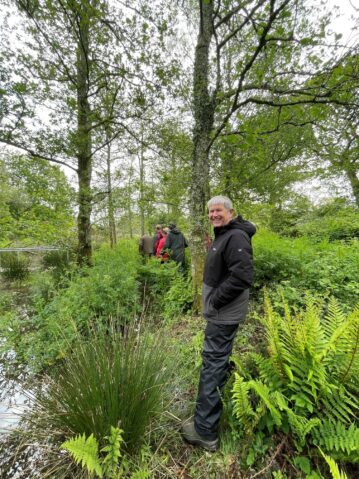
We were pleased to be invited by Kernow Conservation to join the Beaver Project Walk at Woodland Valley Farm, guided by Chris Jones.
The day began with a warm welcome and a cuppa, during which Chris introduced the project and its aims. Following issues with soil degradation on the farm and significant flooding in the nearby village of Ladock, he became increasingly focused on regenerative farming practices that work with nature to restore the landscape and reduce flood risk.
The introduction of beavers forms a key part of this vision. Chris is keen to demonstrate that productive farming can coexist with nature recovery, enhancing rather than degrading the land, and contributing positively to the wider environment.
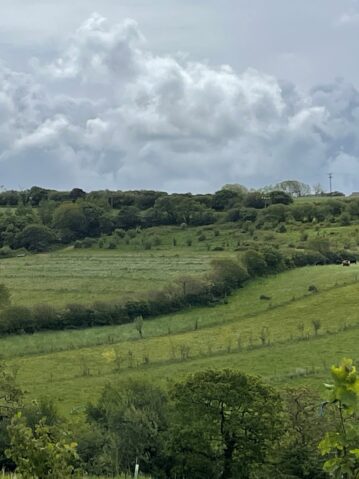
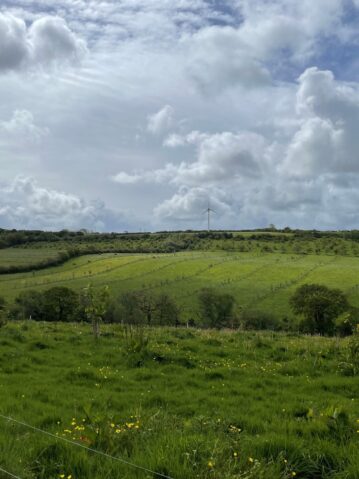
As we made our way towards the beaver enclosure, we passed fields planted with rows of trees. These play an important role in improving soil health: their roots help stabilise the ground, reduce erosion and increase water retention, while fallen leaves and organic matter naturally enrich the soil. They also support biodiversity and wildlife habitats, slow water movement across the landscape and contribute to a more resilient farming system, all while still allowing grazing and production between them.
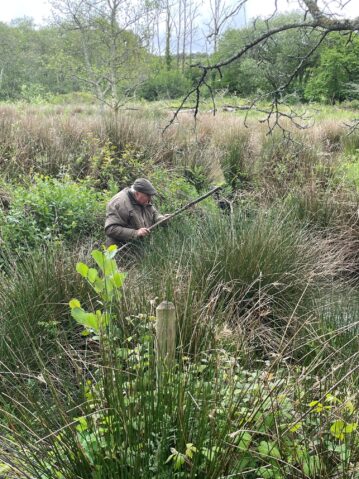
During the walk through the enclosure, I asked Chris whether he had used pigs to help manage brambles and scrub. He explained that he had farmed pigs, sheep and cattle in a regenerative system across the land, demonstrating that productive farming can be fully compatible with biodiversity enhancement and nature recovery.
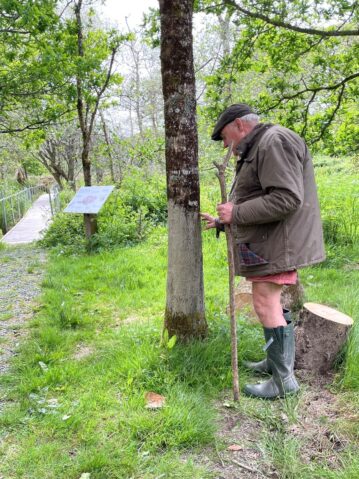
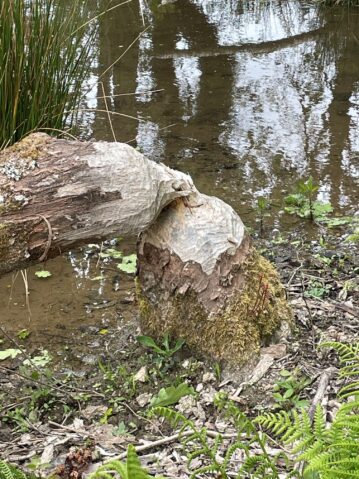
As we explored further, Chris proved to be a real fountain of knowledge, sharing insights into beaver behaviour and the wider environmental benefits they bring. He explained that protecting trees from beaver activity can be achieved using simple methods such as applying a mixture of PVA glue and sand to the trunks. We also learned about their varied herbivorous diet, with bullrushes providing an important source of carbohydrates, while tree bark remains a particular favourite. Encouragingly, Chris noted that around 72% of coppiced stumps regenerate naturally after beaver activity, often resulting in stronger and denser regrowth.
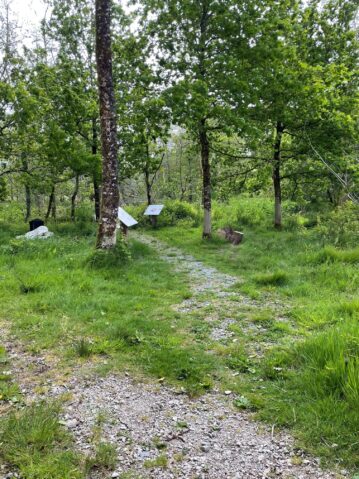
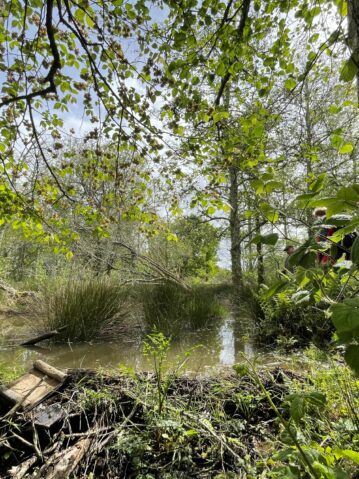
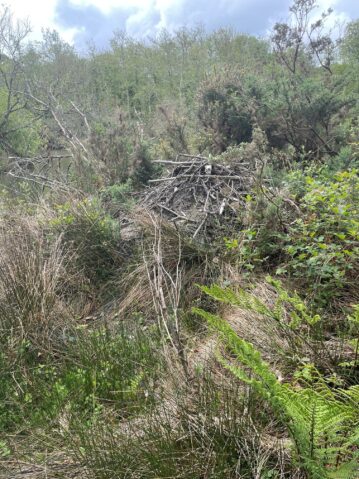
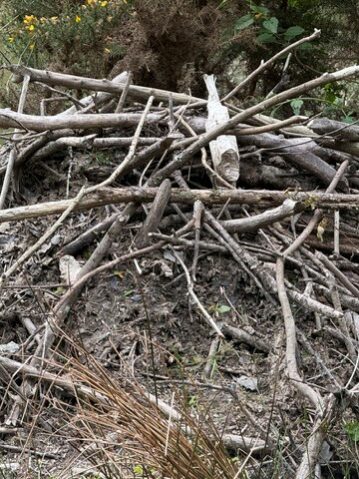
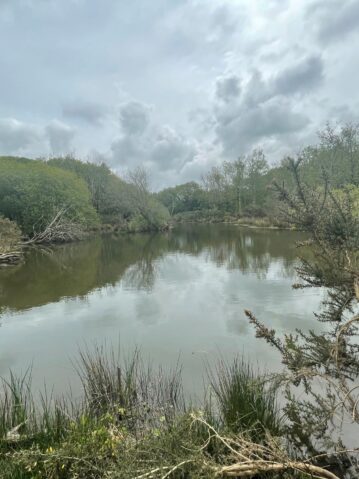
He also highlighted the important role of deadwood created by beavers in supporting habitats and increasing biodiversity. Information displayed around the enclosure showed the significant ecological impact already observed, including records of 11 of Cornwall’s 13 bat species, alongside increases in dragonflies, beetles, amphibians and birdlife. The beaver-created ponds and wetlands are also helping to reconnect streams with their floodplains, improve water storage and create thriving habitats for a wide range of species.
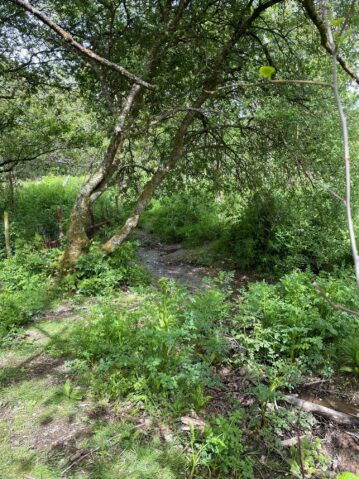
The Nankilly Waters runs through Woodland Valley Farm and the enclosure. At one point, Chris paused beside a section of stream where beavers had not yet been active. While it appeared clear and picturesque, he explained that it was fast flowing. He described how beavers naturally “braid” streams and create a network of ponds and channels, slowing and spreading water across the landscape, which helps reduce downstream flood risk.
Chris also explained that water testing within the beaver ponds has shown a reduction in pollutants. As water moves slowly through these wetlands, sediment and contaminants are filtered out, meaning that by the time it reaches rivers and eventually the sea, it is significantly cleaner.
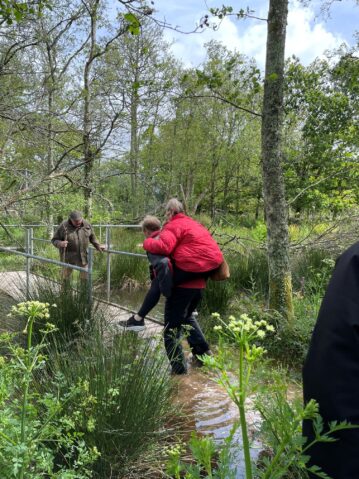
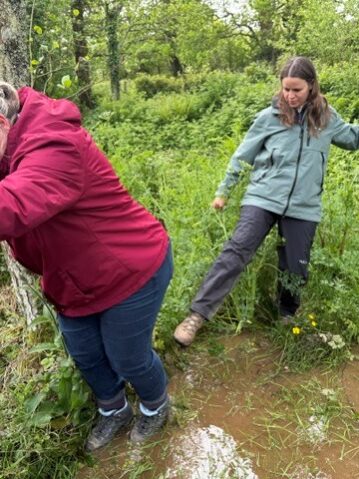
Overall, it was a fascinating and highly informative day. However, be warned: wellies are essential—unless you have a very strong friend willing to offer a piggyback!